
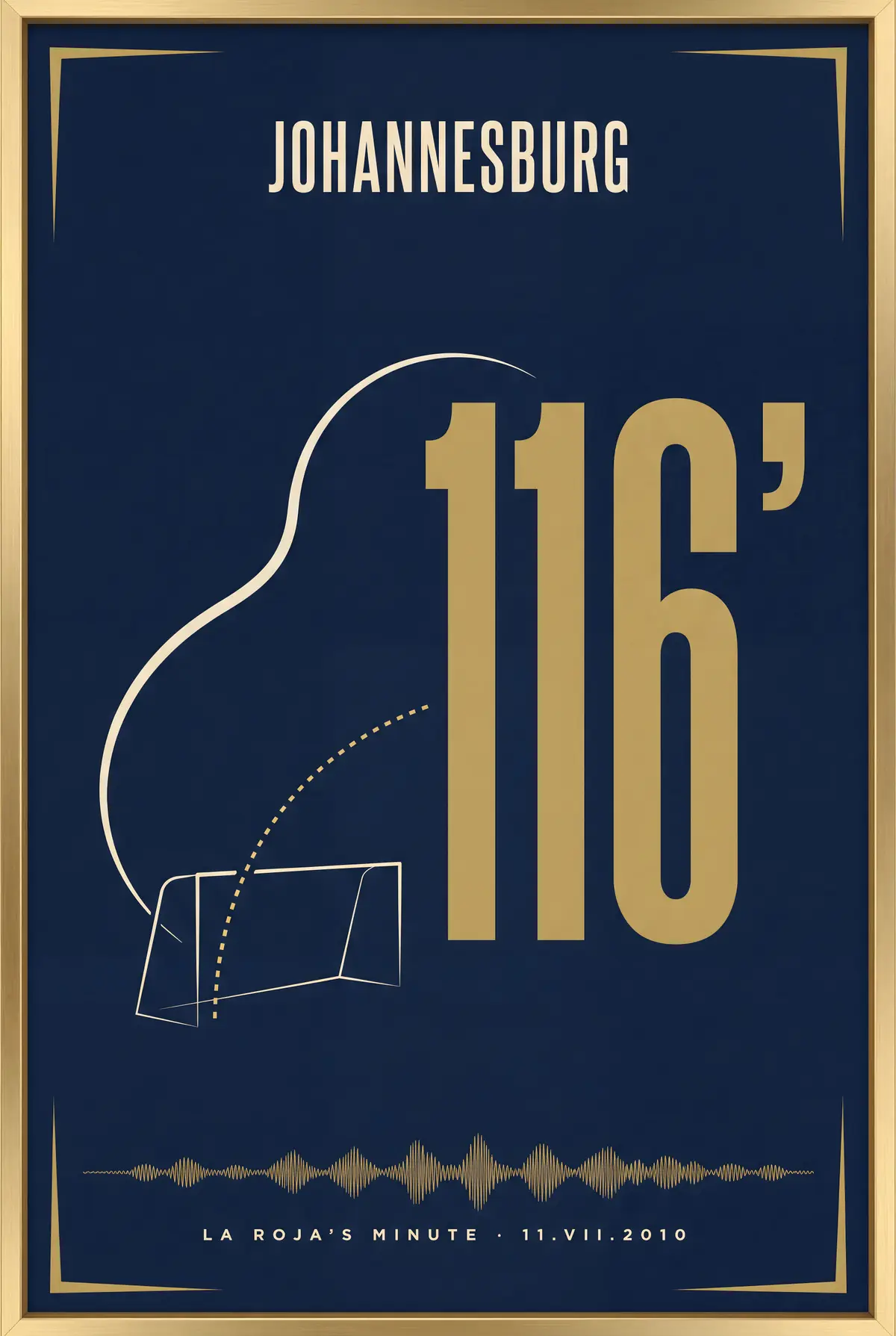
Spain came to the 2010 final as the most admired team in the world, the passing side that had already won a European Championship and made possession look like a philosophy. The Netherlands came determined to stop them by any means available. The result was an hour and a half of friction, and then a single moment of the football Spain had promised.
The match
It was not a classic. The Dutch had decided that the way to beat Spain was to break the rhythm, and the fouls came in waves. The image of the night arrived early, when Nigel de Jong planted his studs into Xabi Alonso's chest and somehow stayed on the pitch. The English referee Howard Webb showed a procession of yellow cards and lost some control of a game that kept threatening to boil over. John Heitinga was eventually sent off in extra time, and Spain finally had the space they had been denied.
Iniesta's goal
With four minutes left before penalties, Cesc Fàbregas slipped the ball through to Andrés Iniesta on the edge of the box. He took a touch, let it sit, and drove it low into the corner. He pulled off his shirt to reveal a message to Dani Jarque, a fellow Spanish footballer who had died the year before, and Soccer City erupted. Spain had their first World Cup.
Why it mattered
This was the summit of the tiki-taka era, the Barcelona and Spain generation of Xavi and Iniesta turning patient possession into silverware at every level. It was Spain's first world title and the middle jewel in an unmatched run of three straight major tournaments. And it gave the competition one of its purest endings: after all the kicking, the team that wanted to play won it with a pass and a finish.