
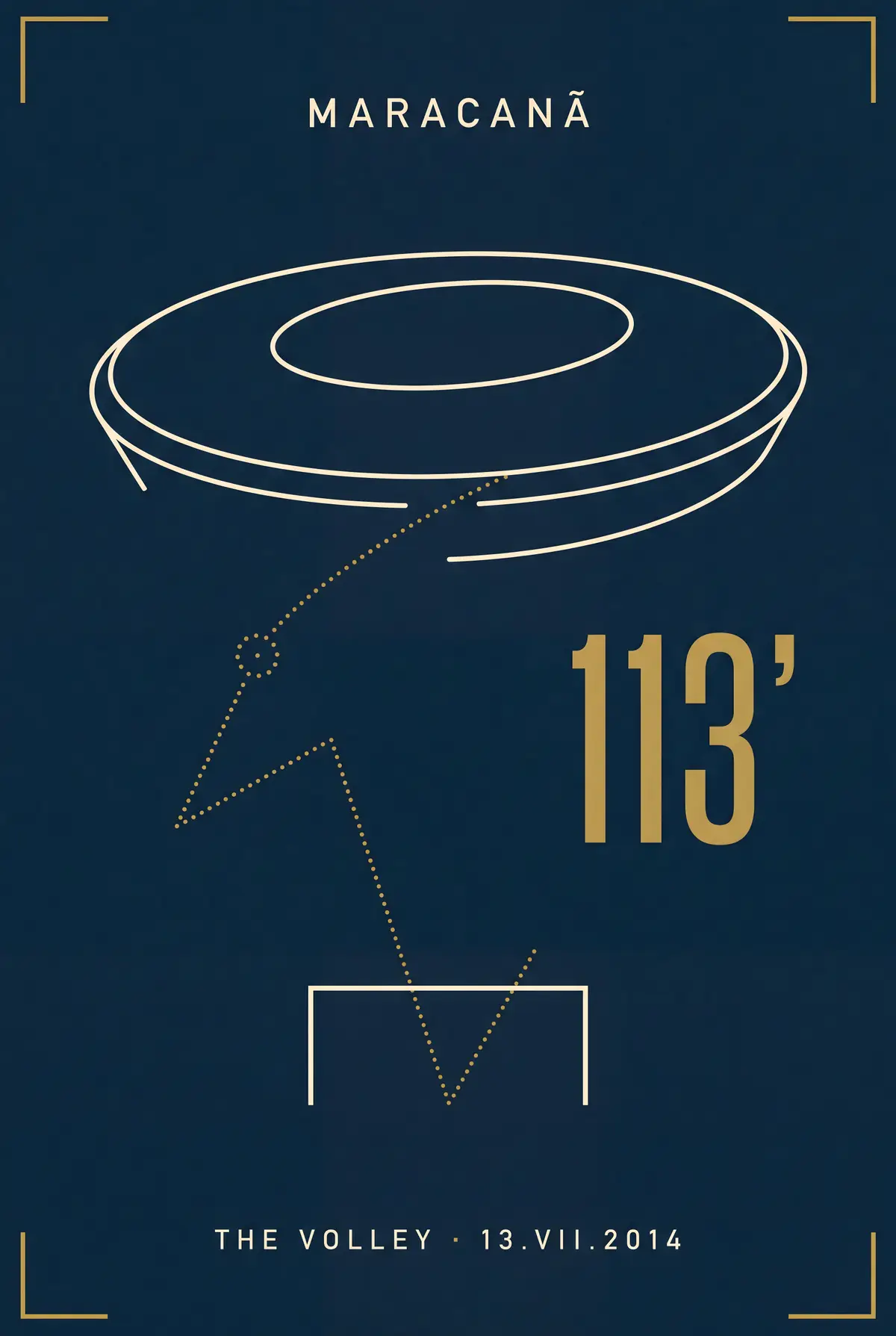
Germany arrived at the Maracanã seven days after dismantling the host nation 7-1, the most shocking result the tournament has ever produced. The final was the opposite: tight, cautious, decided by inches and a single moment of control from a player who had started on the bench.
The match
For all Germany's reputation, Argentina had the clearer chances. Gonzalo Higuaín shot wide when clean through in the first half, then had a goal ruled out for offside. Early in the second, Lionel Messi ran onto a loose ball, rounded into a shooting position, and dragged his effort just past the far post. In a final this close, those are the moments that haunt a nation. Argentina did not take them.
Götze's volley
It went to extra time, and to the substitutes. André Schürrle, himself on as a replacement, drove to the byline and crossed. Mario Götze, another substitute, took the ball on his chest and volleyed it across the goalkeeper with his left foot before it touched the ground. He became the first substitute to score the winning goal in a World Cup final, seven minutes from penalties.
Why it mattered
Germany became the first European side to win a World Cup in the Americas, a barrier that had stood for the entire history of the tournament. The win was the payoff of a decade-long national rebuild, a deliberate project to overhaul German youth football that produced a squad of technicians rather than a single star. Messi was named the tournament's best player and walked past the trophy to collect the award, an image of personal brilliance and collective defeat that would take eight years to resolve.