
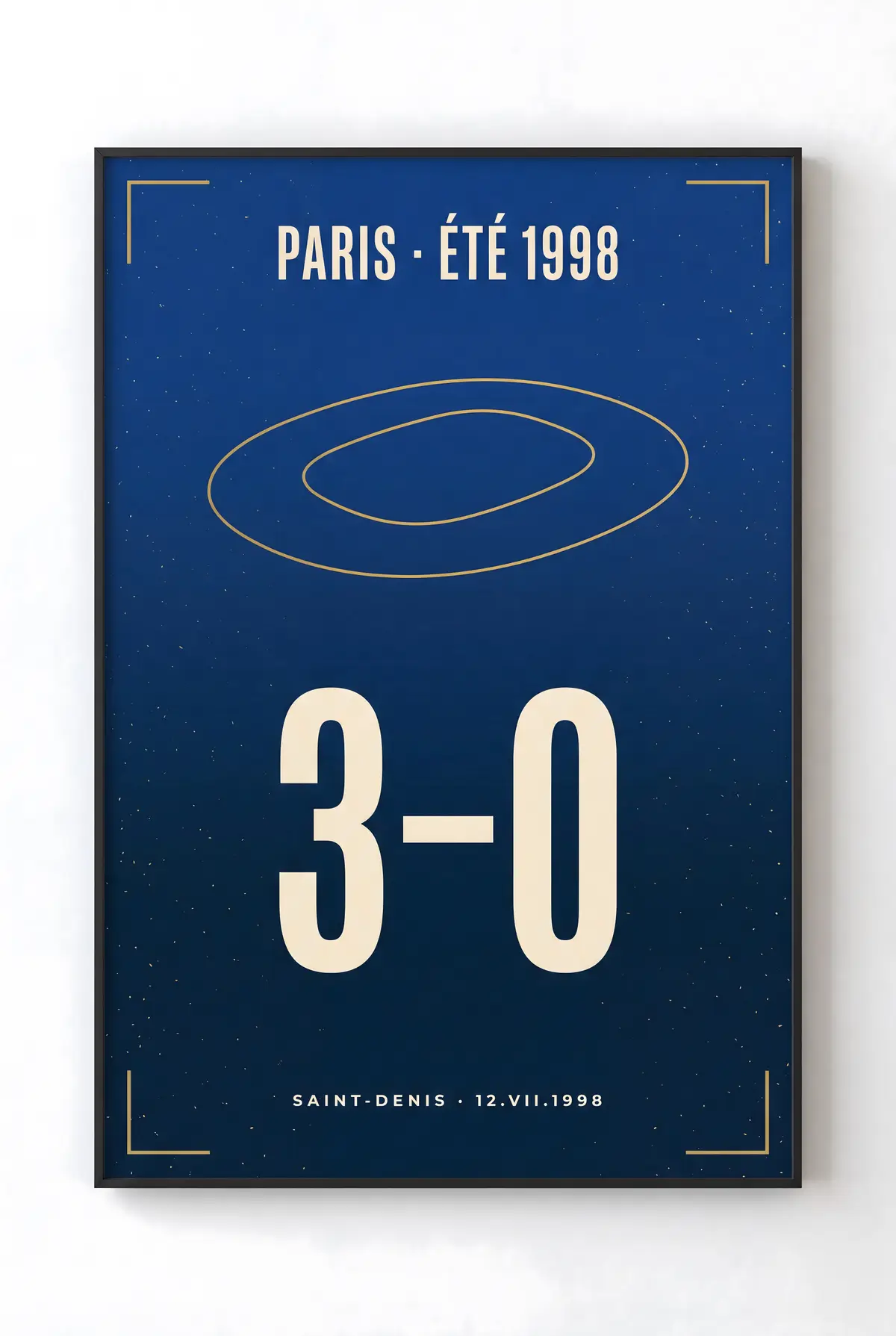
France had never won a World Cup before the summer of 1998. By the end of the night in Saint-Denis they had won it in the manner of a team that always had, and the man at the centre of it was about to become a national monument.
The mystery before kick-off
The strangest final in memory began with a team sheet. Ronaldo, the tournament's golden forward, was left out of Brazil's starting line-up, then reinstated barely an hour before kick-off after what was later described as a convulsive fit hours earlier. He played, but he was a ghost of himself, and Brazil seemed to play the whole night unsettled by whatever had happened to their best player.
The match
France did not need the subplot. Twice in the first half Zinedine Zidane rose to a corner and headed past Cláudio Taffarel, once from a Petit delivery and once from Youri Djorkaeff, the only player to score two headers in a World Cup final. Brazil chased and found nothing. In stoppage time, with Brazil thrown forward and undone, Emmanuel Petit ran clear to make it three.
Why it mattered
A host nation lifting the trophy is rare, and France did it with a side that the country read as a portrait of itself: Zidane the son of Algerian immigrants, a squad drawn from across France and its former empire, playing under the slogan of a multicultural republic. The win spilled onto the Champs-Élysées in numbers not seen since the Liberation.
It also made Zidane. He would go on to a Ballon d'Or, a galáctico move, and a Champions League volley, but the two headers in Saint-Denis are where the legend was set. Brazil, and Ronaldo, would have to wait four years for their answer.